
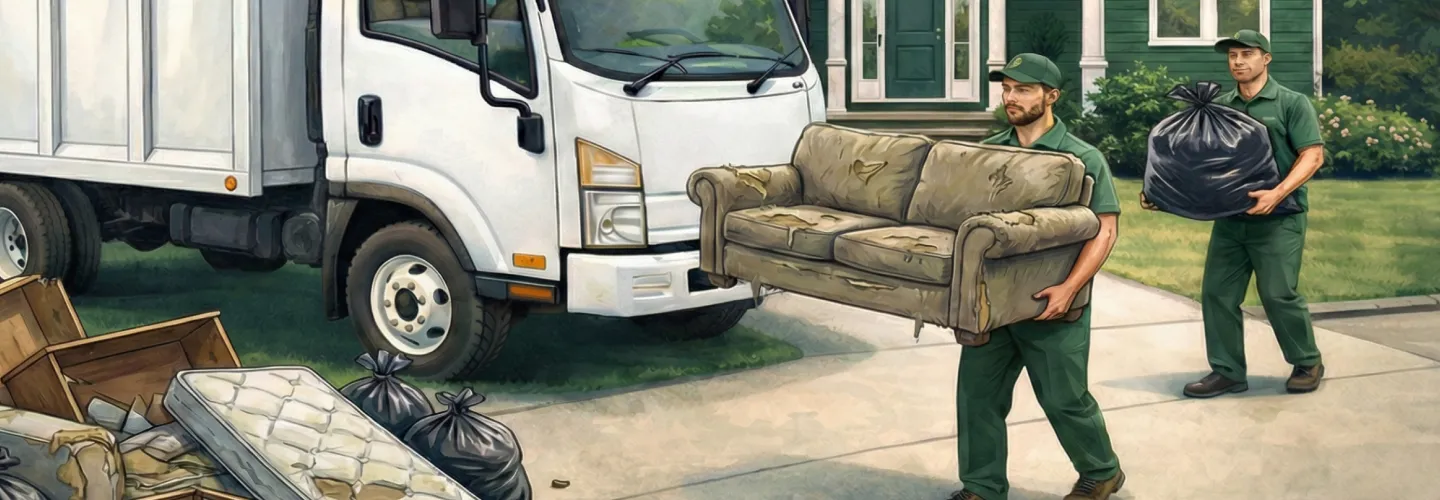
Cambridge Estate Cleanout Services
Choose our Estate Cleanout service for compassionate support, meticulous attention to detail, and a seamless process that eases your transition during life's most challenging moments.
Get a Free QuoteOur Cambridge Junk Removal Services
Estate Cleanout in Cambridge, MA – Local Service Guide
Estate cleanouts in Cambridge, MA, require careful planning and local expertise. Whether you’re handling a family transition in West Cambridge, managing a property in Porter Square, or preparing a Riverside home for sale, each situation brings unique challenges. For residential items like furniture, mattresses, and appliances, cleanouts often follow life events, seasonal moves, or major upgrades. Local donation centers and recycling programs offer sustainable disposal options, but access and weather—especially during New England winters—can impact logistics. In residential spaces such as garages, basements, and yards, spring and fall are peak times for cleanouts, with flooding in areas like Alewife Brook and heavy tree coverage influencing frequency and scheduling. Commercial cleanouts in Kendall Square or Harvard Square often require discreet, after-hours service to minimize business disruption, with volume and timing tailored to industry needs. Specialty services, including hoarding or foreclosure cleanouts, demand sensitive coordination and compliance with Cambridge property guidelines.
Benefits of Estate Cleanout in Cambridge

Fast and Efficient Service
Experienced Cleanout Professionals
Eco-Friendly Disposal Solutions
Transparent Upfront Pricing
Comprehensive Estate Cleanout
Flexible Scheduling Options
Coordinating Estate Cleanout with Cambridge’s Department of Public Works and Solid Waste Programs
Estate cleanout in Cambridge, MA requires careful coordination with the city’s Department of Public Works (DPW) to ensure compliance with local solid waste management protocols. The DPW oversees bulk waste collection, transfer station access, and enforces strict preparation guidelines for large-scale disposals. Residents must schedule bulk item pickups at least 48 hours in advance, with a maximum of two cubic yards or 200 pounds per collection. Items must be placed curbside by 7:00 AM on the scheduled day, and improper placement may result in code violations. The Cambridge Recycling Center, located at 147 Hampshire Street, accepts a range of materials Monday through Saturday, 7:00 AM to 5:00 PM. Fees are assessed by volume, with a $35 per cubic yard charge and a $10 minimum. Required documentation includes a valid resident ID or utility bill.
- Schedule bulk pickups 48 hours in advance
- Maximum 2 cubic yards or 200 pounds per collection
- Curbside placement by 7:00 AM
- Transfer station open Monday-Saturday, 7:00 AM-5:00 PM
- Fees: $35/cubic yard, $10 minimum
Department of Public Works
795 Massachusetts Ave, Cambridge, MA 02139
Phone: (617) 349-4800
Official Website: Department of Public Works
Cambridge’s Environmental Compliance: Landfill Bans, Recycling Mandates, and Hazardous Waste Rules
Cambridge enforces Massachusetts’ comprehensive landfill bans and recycling mandates, requiring estate cleanout projects to separate and properly dispose of regulated materials. Electronics, mattresses, appliances containing refrigerants, and mercury-added products are prohibited from landfill disposal under state law. The city mandates recycling of cardboard, glass, metals, and certain plastics. Hazardous waste—including paints, solvents, and batteries—must be brought to the city’s Household Hazardous Waste collection events, held multiple times per year. Violations of these regulations can result in fines ranging from $50 to $500 per incident. For detailed lists of banned items and recycling requirements, consult the Massachusetts Department of Environmental Protection and the city’s recycling guidelines.
- Electronics and mattresses banned from landfill
- Mandatory recycling of cardboard, glass, metals, plastics
- Hazardous waste accepted only at designated events
- Fines: $50–$500 for improper disposal
- State and city resources provide full lists of regulated materials
Massachusetts Department of Environmental Protection
Boston, MA
Phone: (617) 292-5500
Official Website: Massachusetts Department of Environmental Protection
Permitting, Code Enforcement, and Legal Requirements for Estate Cleanout in Cambridge
Estate cleanout activities in Cambridge may require permits and must comply with local code enforcement, especially when involving large vehicles, building access, or work in historic districts. Right-of-way permits are necessary for parking removal trucks on public streets, with applications submitted at least five business days in advance. Fees typically range from $50 to $150, depending on location and duration. For properties undergoing renovation or demolition, building permits and possible historic district approvals are required. Code enforcement officers may inspect sites for compliance with noise ordinances, operating hours (typically 7:00 AM–7:00 PM), and proper waste handling. Failure to obtain necessary permits or violating city codes can result in stop-work orders or fines.
- Right-of-way permits for truck parking: $50–$150
- Building permits for renovation/demolition debris
- Historic district review for exterior work
- Noise and operating hour restrictions
- Code enforcement inspections and penalties
Department of Code Enforcement
831 Massachusetts Ave, Cambridge, MA 02139
Phone: (617) 349-6100
Official Website: Department of Code Enforcement
Safe Handling and Professional Standards for Estate Cleanout in Cambridge
Estate cleanout projects in Cambridge must adhere to strict safety and professional standards, particularly in older buildings where hazardous materials may be present. The Occupational Safety and Health Administration (OSHA) requires lead-safe work practices in pre-1978 homes and mandates asbestos surveys for pre-1980 structures. Heavy lifting protocols, use of personal protective equipment (PPE), and property protection measures are essential. Service providers must carry liability insurance and, when necessary, provide certificates of insurance (COI) to building management. The Cambridge Department of Public Health offers guidance on safe removal of hazardous materials and can direct residents to certified abatement contractors.
- Lead-safe practices for pre-1978 buildings
- Asbestos survey required for pre-1980 structures
- PPE and heavy lifting safety protocols
- Liability insurance and COI for building access
- Department of Public Health guidance on hazardous materials
Department of Public Health
119 Windsor St, Cambridge, MA 02139
Phone: (617) 665-3800
Official Website: Department of Public Health
What Neighborhoods Do We Serve Throughout Cambridge, MA?
- Harvard Square: Dense historic buildings and limited street parking require advance scheduling and right-of-way permits for removal trucks. Many properties are multi-story walk-ups, necessitating careful stairwell navigation and lead-safe practices.
- Central Square: Mixed-use buildings and high turnover rates, especially among student housing, create frequent estate cleanout needs. Service elevator reservations and tenant notifications are often required.
- Porter Square: A blend of older homes and newer condos, with narrow streets and limited driveway access. Parking permits and coordination with building management are common for large-scale cleanouts.
- Kendall Square: Commercial and residential high-rises with strict building access protocols. COI and service elevator reservations are mandatory for estate cleanout teams.
- Cambridgeport: Predominantly single- and multi-family homes with alley access. Bulk item placement must comply with city curbside collection schedules and alleyway clearance rules.
- North Cambridge: Larger lots and more suburban layouts allow easier truck access, but older homes may require hazardous material assessments.
- East Cambridge: Industrial and commercial zones with unique disposal needs, including office furniture and equipment. Coordination with business licensing and code enforcement is often necessary.